The race to tokenize real-world assets (RWAs) is accelerating: billions of dollars worth of Treasuries, commodities, private credit and alt assets are already onchain; trillions more are predicted.
There are many reasons why. Issuers see opportunities to unlock new markets, both geographically and in cross-functional super apps that bridge payments and finance. However, the biggest opportunity for tokenized assets is known as RWAfi, or RWA DeFi. Plume coined the term in 2024 to describe RWAs that are integrated into DeFi protocols.
Those protocols include RWA perps that enable directional, leveraged trading in equities and commodities. Equity perps were the first to emerge in this new category; read this post on the growth of equity perps for a discussion of the specific opportunities, risks and infrastructure challenges involved. And, check out our case study on Lighter to explore the DEX-Oracle partnership behind one of the leading equity perp DEXs.
In this brief article, we’ll focus on how RWAs can be used as collateral in decentralized finance (DeFi) lending protocols and the enabling role of RWA Oracles. You’ll learn about the players and technologies making RWAfi lending possible and understand how oracles enable RWAs to be used as collateral for DeFi.
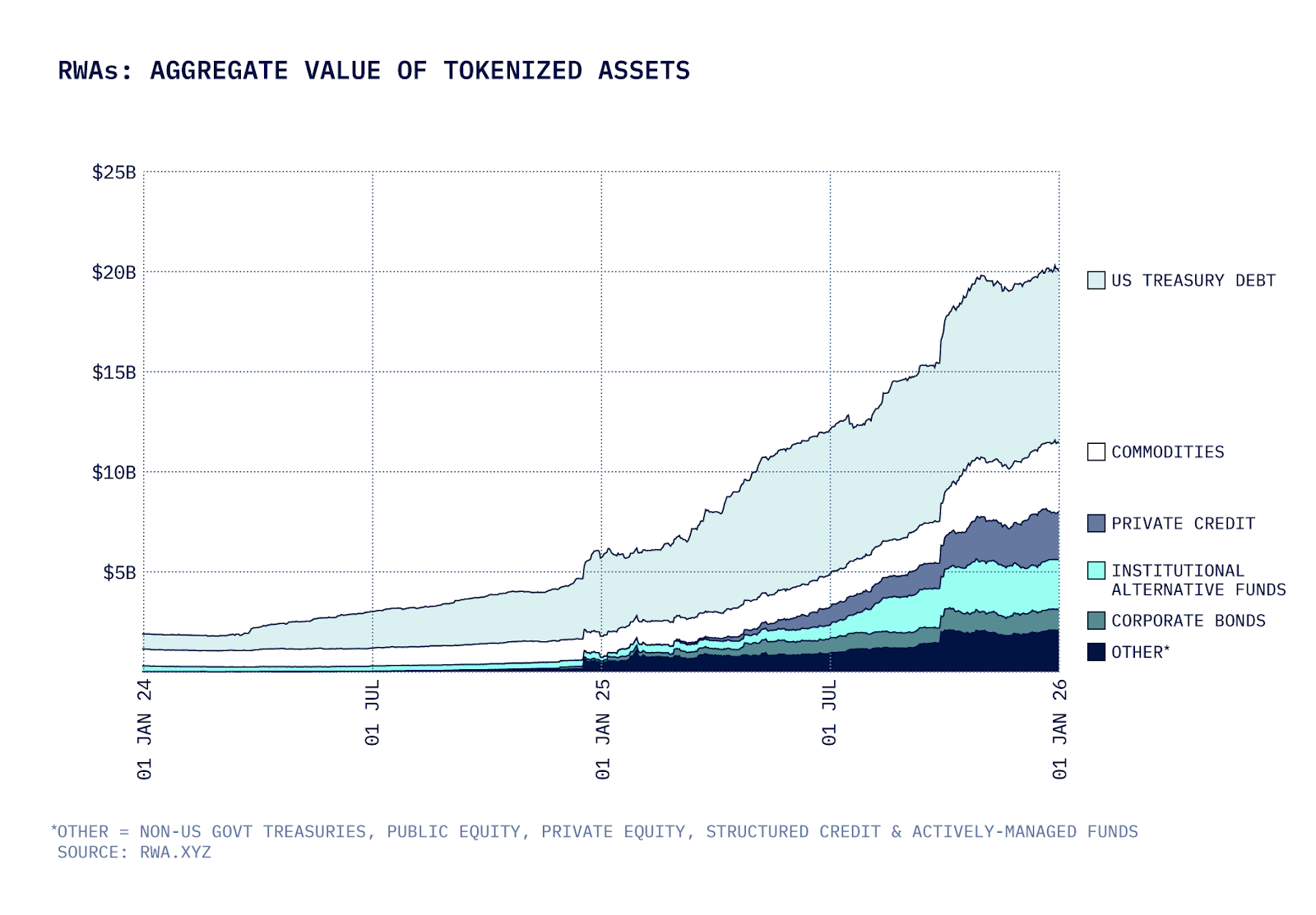
RWA DeFi is growing quickly. Get in touch to learn how RWA oracle price feeds can help your protocol, asset or platform integrate and capitalize on the opportunity. Stork is applicable in a wide array of DeFi oracle use cases, from FX to AI, as demonstrated recently in a collaboration with Arc blockchain.
RWAfi is growing because of a fundamental reimagining of how capital markets operate. Innovations in DeFi have led to novel systems for issuing, servicing and securing loans.
Overcollateralized Lending Protocols are the key enabling technology, already allowing crypto asset holders to unlock liquidity without selling. Users deposit assets as collateral and borrow against their positions, which are automatically liquidated if collateral value falls below established thresholds.
The first generation of DeFi lending included protocols such as Aave, Compound and MakerDAO. These enabled a broad range of cryptocurrency investors to borrow against their digital assets in much the same way as institutional investors and high-net-worth individuals can access securities lending in equity markets. Integration of stablecoins such as USDC into these protocols could be considered the first example of RWAfi.
DeFi innovators like Kamino, Loopscale and Morpho are today deploying modular lending architecture approaches. These systems isolate component functions like risk management, collateral management and interest rate determination, supporting modular combinations of these components into specialized lending markets. Today, these DeFi lending protocols (and others, including Aave Horizon) are leading the integration of RWAs into RWAfi, enabling new financial products that are compelling for a broad range of investors.
The reality is that stocks, bonds and commodities trade on systems and principles that don’t line up neatly with DeFi’s novel approaches. This is where RWA oracles come in: making that asset productive within DeFi requires reliable price feeds, capable of generating a reference price from a scattered array of price discovery venues that spans real-world and crypto infrastructure.
RWA oracles are systems that bridge off-chain price discovery and market data into blockchain environments where smart contracts can act on that information. An RWA oracle may ingest data from onchain sources, offchain sources or a combination of the two. Without accurate oracles, even the most pristine tokenized asset is essentially dead capital.
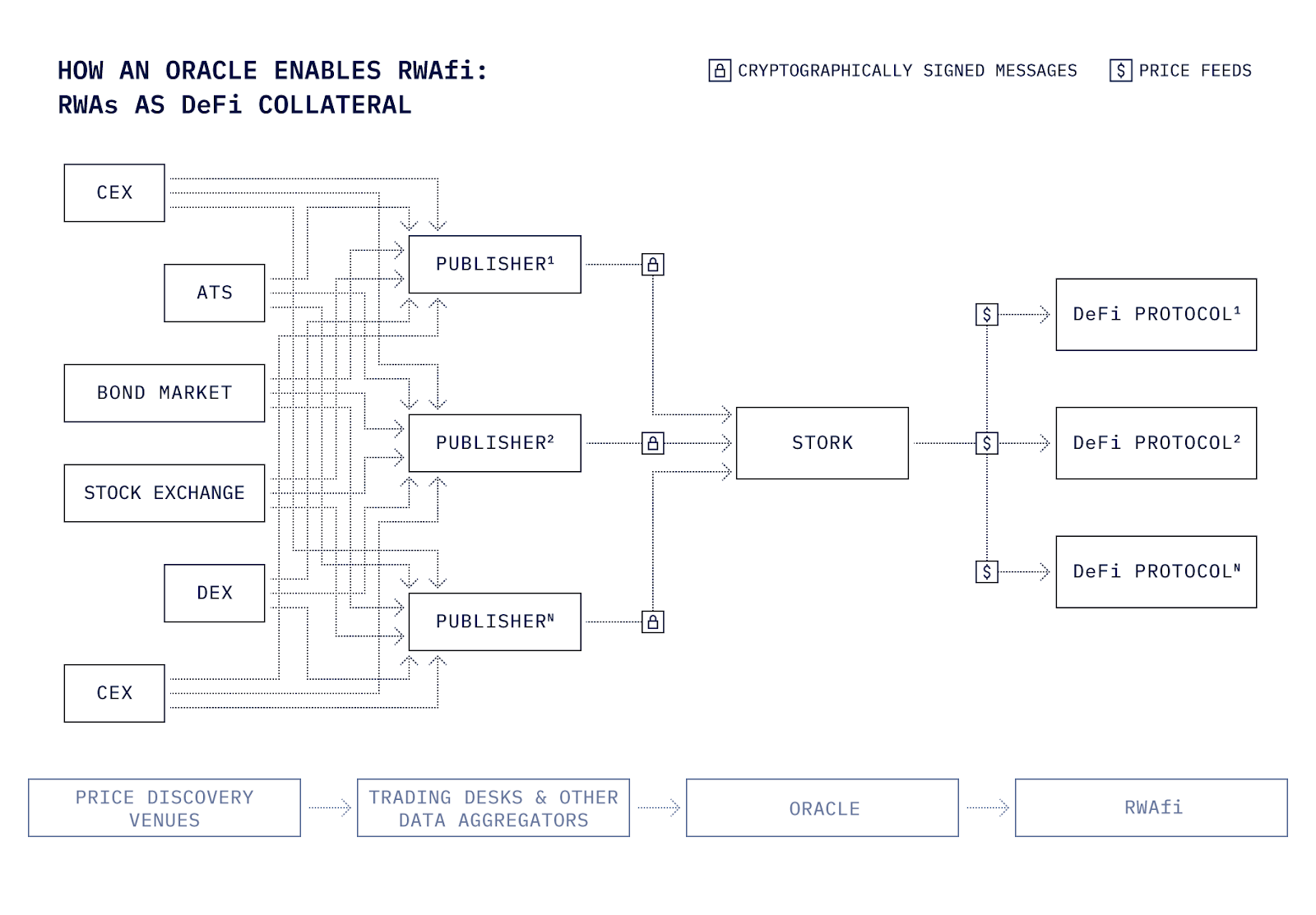
The flow chart above illustrates some of the challenges faced by RWA Oracles: fragmented price discovery and demanding data consumers (i.e., liquidation engines in DeFi protocols). These challenges may not apply for all RWAs. For example, a tokenized money market fund, the fund administrator is responsible for reporting net asset value (NAV) per share, which would be treated as a single source of truth. In all cases, RWAfi requires near-perfect uptime, reliable price feeds and verifiable provenance.
For investors and asset managers, the message is clear: RWA DeFi is at the heart of the opportunity in tokenized assets, but there are challenges in integrating real-world assets into onchain financial systems. The quality of RWA oracle infrastructure directly impacts the opportunity set in DeFi and the resiliency of onchain systems.
For builders, the path forward requires thinking carefully about what belongs onchain versus what can be handled offchain with cryptographic verification. The protocols that will capture the most value in RWAfi are those that make smart infrastructure choices today.
The tokenization of real-world assets is already happening, as is the integration of DeFi innovations into global capital markets. The question is which protocols, which asset managers, and which investors will position themselves to capture that value. Understanding RWA oracles isn't just technical due diligence, it's essential competitive intelligence.
Learn more about Stork and RWA oracles: Get in touch.